-
![High-Voltage Motor Current Calculation]()
High-Voltage Motor Current Calculation
In industrial power distribution and equipment selection, calculating the rated current of a high‑voltage motor is a fundamental yet crucial task. Many engineers new to high‑voltage systems may think it is complicated, but in fact its core principle is the same as that for low‑voltage motors – it all comes down to power, voltage, and power factor.
MORE07-10 / 2026
-
![Relationship between Motor Torque and Motor Volume]()
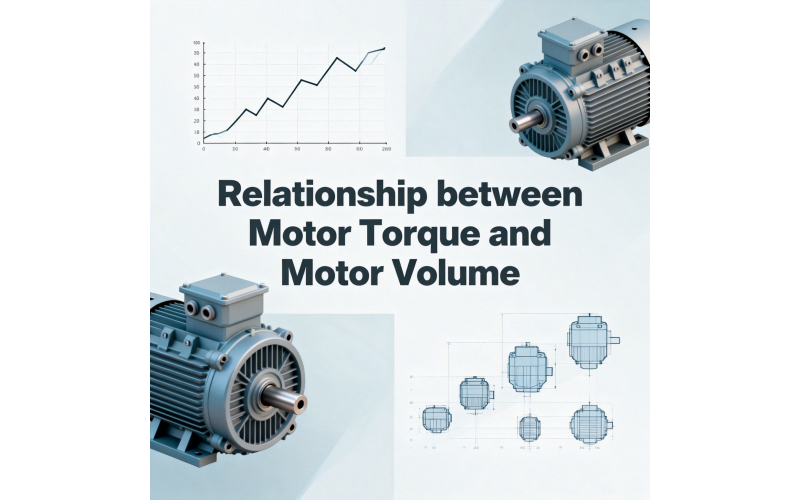
Relationship between Motor Torque and Motor Volume
It can be stated boldly - and accurately - that the overall volume of a motor is determined by the torque it must produce: the larger the volume, the greater the torque. Of course, there may be exceptions to this rule, but as a general guideline for motor selection, it is very useful.
MORE06-12 / 2026
-
![Common faults and countermeasures of reducers]()
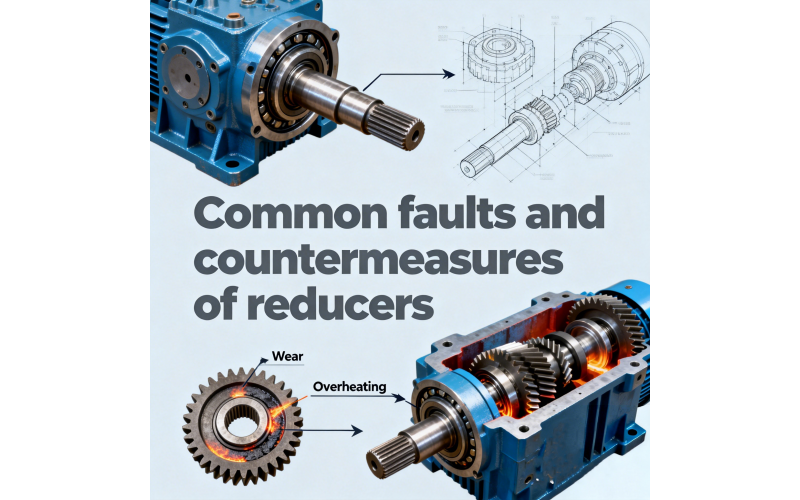
Common faults and countermeasures of reducers
Since a reducer is a transmission device, many faults often occur during its operation due to external working conditions (e.g., bearing heavy loads) and internal factors.
MORE06-12 / 2026
-
![What's the Difference 【Shanghai Motor】 & 【Shangdian Motor】]()
What's the Difference 【Shanghai Motor】 & 【Shangdian Motor】
Although Shanghai Motor (Shanghai Electric Machinery Factory Co., Ltd.) and Shangdian Motor (Shanghai Shangdian Electric Co., Ltd.) share similar names and a common origin, they have each evolved into distinct entities in terms of corporate nature, operational scale, product positioning, and market standing.
MORE05-26 / 2026
-
![What conditions need to be met for exporting motors to Taiwan?]()
What conditions need to be met for exporting motors to Taiwan?
Low-voltage motors are subject to mandatory BSMI inspection and control, while high-voltage motors are not subject to this restriction. Currently, high-voltage motors have no mandatory energy efficiency regulations and do not require registration in any official system; they only need to comply with relevant specifications for high-voltage electrical equipment.
MORE05-26 / 2026
-
![What is the difference between the routine test and the type test for high-voltage three-phase asynchronous motors?]()
What is the difference between the routine test and the type test for high-voltage three-phase asynchronous motors?
The core difference between the routine test (factory test) and the type test for high-voltage three-phase asynchronous motors is: The routine test is a "factory pass certificate" performed on every motor to verify the manufacturing quality of each unit. The type test is a "design validation report" performed on a sample from the same specification to verify the design and performance compliance of the entire series.
MORE04-17 / 2026